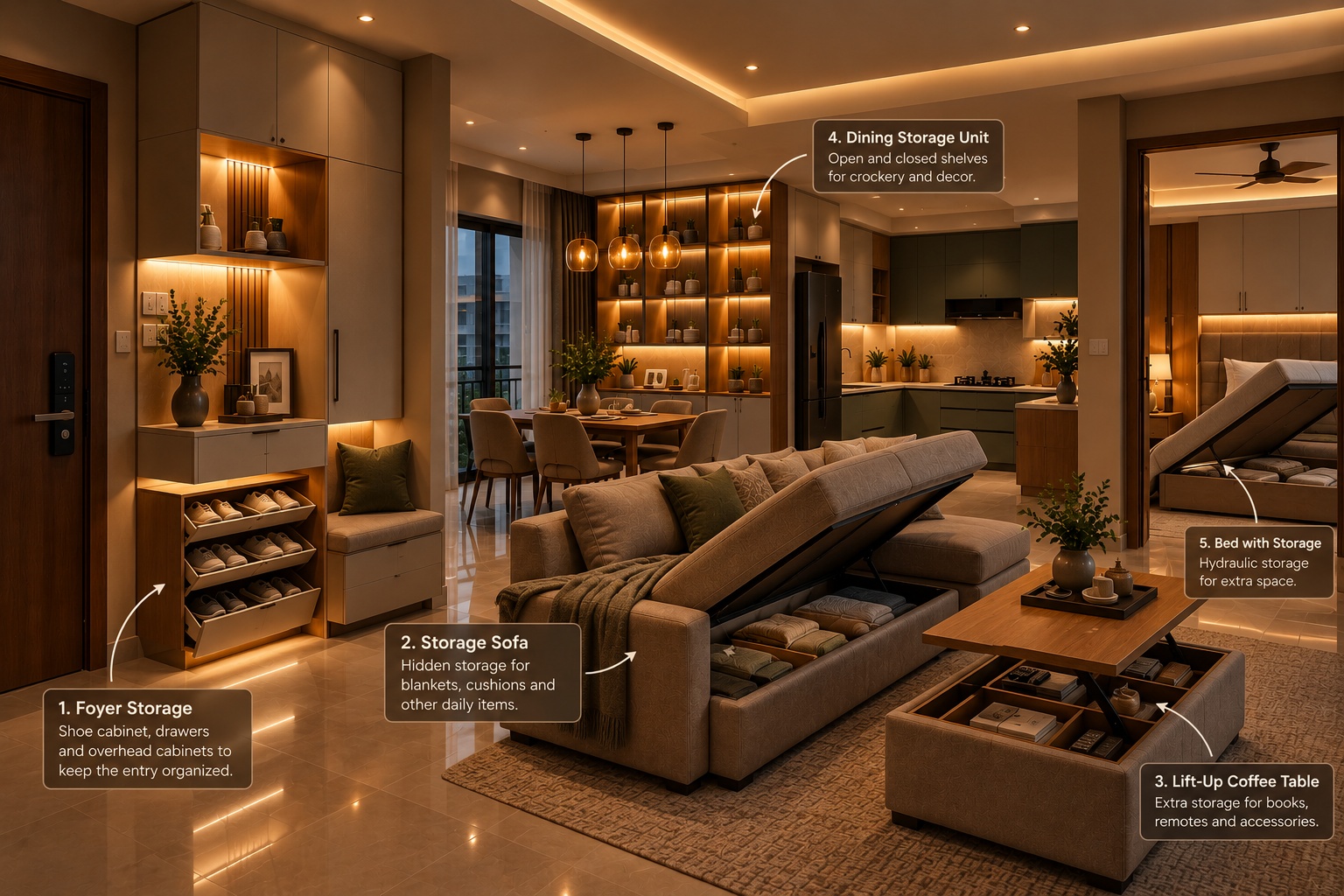
Living in a modern apartment often means making the most of every corner without making the home feel crowded. From clothes and kitchen essentials to everyday household items, belongings can quickly take over valuable space when there is no proper storage plan. The solution is not always to add more cupboards. It is to use the available space more intelligently.
Smart storage is about creating a home where everything has a place while keeping the rooms open, comfortable and visually appealing. With thoughtful furniture placement, concealed cabinets, wall-mounted shelves and multifunctional designs, even a compact apartment can feel organised and spacious.
In Indian homes, storage needs are often different from those in other countries. Families may need space for seasonal clothing, extra bedding, cooking utensils, religious items, cleaning supplies and luggage. A practical storage plan should accommodate these everyday requirements without filling every wall with bulky furniture.
Whether you live in a 2BHK apartment or a larger 3BHK flat, the right approach can help you create a more functional home. Here are practical ideas to organise your belongings, make better use of unused areas and maintain a clean, modern appearance.
Smart Storage Ideas for Modern Apartments: Start With the Right Furniture
The easiest way to improve storage is to choose furniture that serves more than one purpose. Instead of filling a room with separate pieces, look for designs that combine everyday functionality with concealed storage.
For example, a bed with built-in drawers can store extra bedsheets, while a coffee table with a storage compartment can keep remote controls, magazines and other small items out of sight. These solutions are particularly useful in apartments where adding another cupboard would make movement difficult.
Furniture ideas worth considering include:
Storage beds: Keep extra pillows, blankets and seasonal bedding in one accessible place.
Ottomans with compartments: Provide additional seating while hiding smaller household items.
Nesting tables: Offer flexible surface space without permanently occupying a large area.
Foldable desks: Create a compact work area that can be closed when not in use.
Floating TV units: Provide storage while leaving more visible floor space beneath the furniture.
Before buying multifunctional furniture, check the dimensions carefully. A storage bed may offer generous capacity, but it will not be practical if there is insufficient clearance to open its drawers or lift the mattress.
A useful starting point is to identify the items you use daily and those you need only occasionally. Keep everyday belongings easy to reach and place seasonal items in less frequently accessed storage.
Make Bedrooms More Organised With Hidden Storage
Bedrooms can become cluttered quickly because they need to accommodate clothing, accessories, bedding and personal belongings. The goal is to provide enough storage without making the room feel like a row of cupboards.
Start by reviewing the furniture you already have. Sometimes, reorganising existing drawers and using the space beneath the bed can solve the problem without requiring additional cabinetry.
A wardrobe should be planned around the clothes and accessories you actually own. Long-hanging sections are useful for dresses and coats, while drawers and shelves work better for folded clothes, accessories and smaller items.
A wooden wardrobe can be a practical choice when designed with the right internal layout. Light wood finishes, handleless shutters and simple vertical lines can help the wardrobe blend into the room rather than dominate it. The material, finish and construction quality matter more than decorative detailing alone.
For smaller bedrooms, consider sliding wardrobe doors if the layout makes traditional hinged doors inconvenient. However, sliding systems require suitable track space and may not provide access to the entire wardrobe opening at once.
Other useful bedroom storage ideas include:
Install bedside tables with drawers instead of open-legged tables if you need concealed storage.
Use drawer dividers to separate accessories and prevent smaller items from getting mixed together.
Store rarely used luggage on a suitable upper shelf, provided it can be accessed safely.
Keep frequently used clothes at a comfortable height to avoid constant bending or reaching.
Use matching storage boxes for seasonal belongings to make cupboards easier to organise.
One important detail is lighting. A wardrobe with adequate internal lighting makes it easier to find clothes and use the available space effectively. Plan electrical fittings carefully so that they remain safe and easy to maintain.
Use Kitchen and Living Room Storage Without Creating Visual Clutter
Kitchens and living rooms often contain many small items that are used throughout the day. If every item remains visible, even a well-designed apartment can look untidy.
In the kitchen, organise storage according to how you cook. Indian households often need convenient access to spices, pulses, cooking oils, pressure cookers, utensils and larger cookware. Grouping these items by use makes everyday tasks easier.
Pull-out drawers can help organise pots and pans, while vertical dividers can separate trays, chopping boards and baking sheets. Corner storage systems may also help make awkward cabinet areas more accessible, depending on the cabinet dimensions.
Keep heavier cookware in lower cabinets where it can be reached comfortably. Frequently used spices and utensils should be close to the cooking area, but not positioned where they are exposed to excessive heat or interfere with safe cooking.
In the living room, closed cabinets are useful for hiding cables, games, paperwork and miscellaneous household items. Open shelves can still be used for a few selected decorative objects, books or personal items, but filling every shelf usually creates unnecessary visual clutter.
Try these practical adjustments:
Keep the TV console wide enough for your equipment, but proportionate to the wall.
Use cable-management solutions to keep wires organised and out of sight.
Store children's toys in accessible baskets or closed compartments.
Use a slim shoe cabinet near the entrance instead of allowing footwear to spread across the floor.
Reserve open shelves for items you genuinely want to display.
The objective is not to hide everything. A home should still feel personal and lived in. The better approach is to decide which items deserve to remain visible and which ones need a dedicated storage space.
Use Vertical Space and Unused Corners More Effectively
Floor space is limited in many modern apartments, but walls and overlooked corners can provide additional storage opportunities. The challenge is to use these areas without making the room feel enclosed.
Wall-mounted shelves can hold lightweight decorative items, frequently used books or selected everyday essentials. Tall cabinets can make use of vertical space, while a narrow unit beside a refrigerator or washing machine may accommodate items that otherwise have no dedicated location.
However, vertical storage should be planned carefully. Overloading walls with cabinets can make a compact room feel heavier, particularly when the furniture is dark or extends across every available wall.
A few ways to use overlooked spaces include:
Add a compact cabinet above a washing machine, where suitable clearances allow.
Use the space beneath a staircase for closed storage in homes with stairs.
Install a narrow utility cabinet for cleaning products and household supplies.
Consider wall-mounted bedside shelves where floor space is limited.
Use suitable overhead cabinets in kitchens or utility areas for less frequently used items.
Before installing wall-mounted units, confirm that the wall can support the intended load and use appropriate fixings. Heavy cabinets should be secured according to the wall construction and the manufacturer's installation requirements.
Measure the space before ordering furniture. A unit that is only a few centimetres too deep can interfere with doors, walkways or nearby appliances.
Create a Spacious Look With Better Storage Planning
Good storage is not only about capacity. It also affects how large, bright and comfortable a room appears.
Large furniture pieces, inconsistent finishes and too many exposed belongings can make an apartment feel crowded. Choosing a simpler design and keeping the main walking areas clear can make the same room feel more open without changing its actual dimensions.
This is where thoughtful interior planning becomes valuable. The best home interiors are not necessarily those with the most expensive furniture or the greatest number of cabinets. They are the spaces where storage, lighting, circulation and appearance work together.
For example, imagine a compact 2BHK apartment where the bedroom has a large freestanding cupboard, a separate chest of drawers and several storage boxes on the floor. Replacing these with a well-planned wardrobe, using the space beneath the bed and removing unnecessary furniture may create a cleaner layout without increasing the room size.
This is an illustrative design scenario, not a documented client project. The result in a real home would depend on its dimensions, furniture requirements and existing layout.
To plan your own apartment, begin with these steps:
List your belongings: Identify what needs daily access and what can be stored seasonally.
Measure each room: Record wall lengths, door openings, window positions and available walking space.
Identify unused areas: Look for suitable space beneath beds, inside cabinets and along underused walls.
Choose storage by function: Decide whether drawers, shelves, hanging space or closed cabinets are most useful for each category.
Keep finishes consistent: Repeating a small selection of colours and materials helps furniture feel visually connected.
Review the layout before installation: Confirm access, door movement, electrical points and furniture clearances before approving the final design.
There is no universal storage measurement that works for every apartment. The right dimensions depend on the user's belongings, room layout and furniture type. For that reason, a measured plan is more useful than copying a design photograph without checking whether it suits your home.
If you are planning a renovation, ask your interior designer to show the proposed storage layout alongside the furniture arrangement. This makes it easier to understand how the room will function after installation.
Frequently Asked Questions
1. What are the best smart storage ideas for small apartments?
Multifunctional furniture, storage beds, sliding-door wardrobes, wall-mounted shelves and well-organised kitchen cabinets are useful options. Start by identifying the belongings that need storage before buying new furniture. This prevents unnecessary cabinets from occupying valuable floor space.
2. How can I add more storage without making my home look crowded?
Choose furniture that fits the room's dimensions, use concealed storage where practical and keep the main walking areas clear. Light finishes, floating furniture and a limited number of open shelves can help maintain a spacious appearance. Avoid installing cabinets on every available wall simply to increase storage capacity.
3. Is a wooden wardrobe suitable for a modern apartment?
Yes, a wooden wardrobe or a wardrobe with a wood-look finish can suit modern apartments when its dimensions and internal layout match the room's needs. Light finishes and simple shutters can create a clean appearance. Compare the board or wood material, hardware, moisture resistance and installation quality before making a decision.