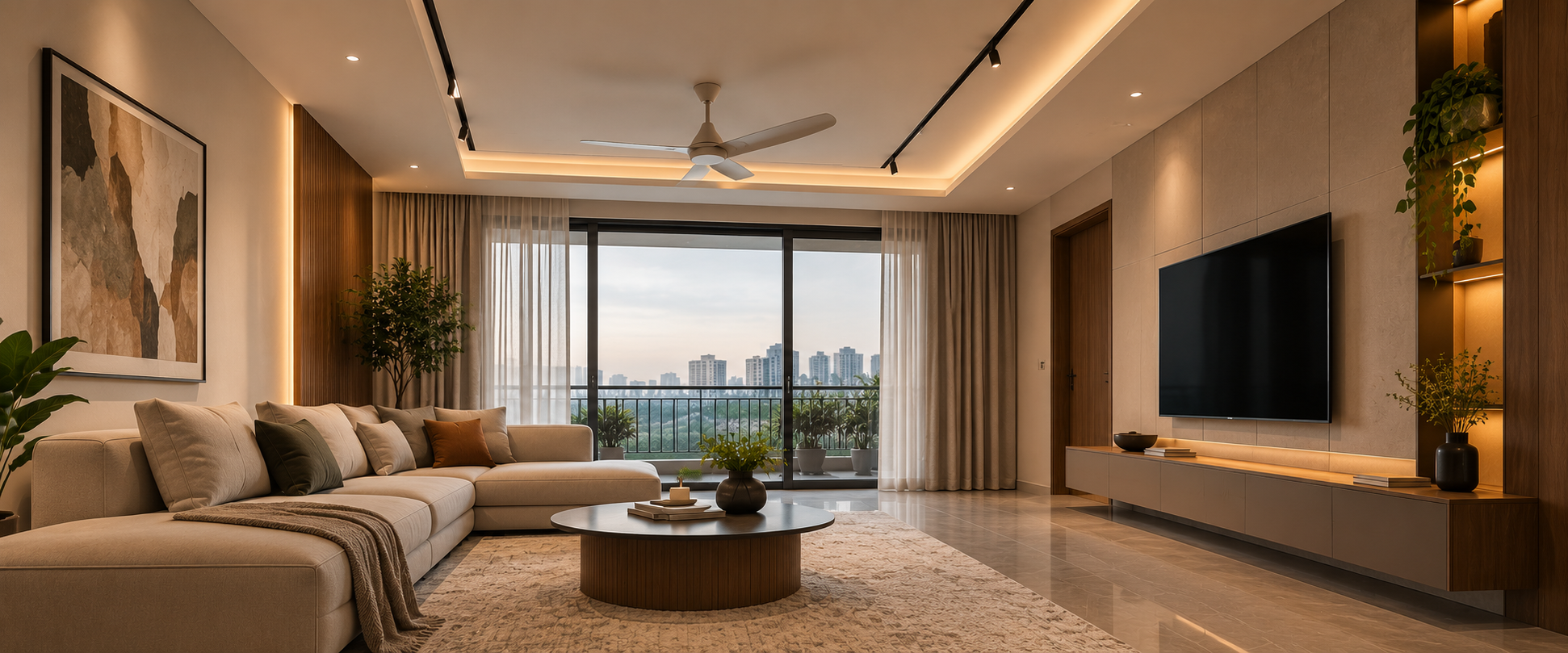
A well-planned ceiling can change the way a room looks and feels without requiring a complete home renovation. From soft lighting in the bedroom to clean, modern lines in the living room, a designer false ceiling can add character, improve lighting distribution and help different areas of a home feel more organised.
In modern Indian apartments, ceiling design needs to do more than look attractive. It should suit the room's height, work with natural daylight, accommodate electrical fittings and remain practical for everyday living. A design that looks impressive in a large showroom may not work as well in a compact apartment in Noida Extension or Greater Noida West.
The good news is that homeowners have plenty of options in 2026. Simple gypsum ceilings, concealed LED strips, recessed spotlights, wooden-look panels and layered lighting can all create a contemporary appearance without making every room look overly decorated.
The key is choosing a design that fits your home, lifestyle and budget. Here are practical ideas to help you plan a ceiling that looks modern today and remains functional for years.
Why Designer False Ceilings Are Popular in Modern Indian Homes
False ceilings have become a common feature in contemporary interiors because they offer a convenient way to organise lighting and create a more finished appearance. They can conceal selected wires, create visual separation between spaces and provide a neat surface for integrated lights.
However, installing a false ceiling is not necessary in every room. A well-finished plain ceiling with thoughtfully positioned lights can look just as attractive, particularly in smaller homes with limited ceiling height.
1. They create a cleaner appearance
A false ceiling can hide certain electrical cables, mounting points and other services when the design allows for suitable access. This helps create a more organised appearance, especially in living rooms and bedrooms.
2. They improve lighting flexibility
Instead of relying on one bright ceiling fixture, homeowners can combine recessed lights, concealed LED strips and selected accent lights. Each source serves a different purpose, from general illumination to highlighting a wall or decorative feature.
3. They help define different areas
In an open-plan apartment, a change in ceiling level or lighting arrangement can visually distinguish the dining area from the living room. This can be achieved without adding a physical partition that blocks light or makes the space feel smaller.
Designer False Ceiling Ideas for Living Rooms
The living room is often the best place to introduce a distinctive ceiling because it is used for relaxing, entertaining guests and spending time with family. The right design should complement the furniture, wall finishes and natural light rather than compete with them.
Minimalist gypsum ceiling with concealed lighting
A simple gypsum border with concealed LED strip lighting creates a soft glow around the ceiling's edges. It works particularly well with neutral walls, understated furniture and contemporary Indian apartment layouts.
For a balanced result, consider:
A simple rectangular ceiling border rather than several decorative layers.
Warm white lighting for a comfortable evening atmosphere.
A separate switch for the concealed lights and main room lights.
Sufficient space for maintenance and access to electrical components.
This approach is useful for homeowners who want a modern appearance without making the ceiling the main attraction in the room.
Geometric ceiling with recessed spotlights
Geometric ceiling designs use straight lines, rectangular sections or subtle changes in level to add structure. Recessed spotlights can be positioned to illuminate seating areas, artwork or selected walls.
Avoid placing too many spotlights at equal distances simply to fill the ceiling. Their position should relate to the room's layout and lighting needs.
Wooden-look ceiling accents
Wooden-look panels or narrow accent strips can introduce warmth into a contemporary living room. They work well alongside white ceilings, neutral upholstery and simple furniture.
Actual wood, decorative laminates and wood-finish ceiling panels have different maintenance requirements. Before selecting a material, check its weight, suitability for overhead installation, fire-safety requirements and the manufacturer's recommendations.
Bedroom False Ceiling Ideas for a Calm and Comfortable Space
Bedroom lighting should support different activities without creating unnecessary glare. You may need brighter light while getting dressed, softer lighting before sleeping and focused illumination for reading.
Cove lighting around the bed area
A simple ceiling border with indirect lighting can create a relaxed evening atmosphere. Warm white light generally works well in bedrooms because it produces a softer appearance than very cool lighting.
The ceiling should not be so low or visually heavy that it makes the bedroom feel cramped. In a room with limited height, a narrow perimeter design or carefully placed surface-mounted lights may be more suitable.
False ceiling with subtle wooden detailing
A small wooden-look accent above the bed can create a visual connection between the ceiling, headboard and bedside furniture. Keep the pattern restrained if the room already contains textured wallpaper, decorative wall panels or a detailed headboard.
Practical bedroom lighting tips
Use separate controls for general lighting and decorative lighting.
Avoid placing exposed or high-intensity lights where they shine directly into your eyes while lying in bed.
Choose dimmable fittings where compatible equipment is available.
Plan ceiling lights around wardrobes, dressing mirrors and reading areas.
Kitchen False Ceiling and Lighting Ideas for Indian Homes
Kitchen ceilings require a more practical approach than decorative ceilings in bedrooms or living rooms. Indian cooking can produce steam, grease and airborne particles, particularly when several dishes are prepared daily.
A ceiling design should therefore work alongside effective ventilation and a properly selected chimney or exhaust system.
Simple ceiling designs for modular kitchens
A plain, easy-to-maintain ceiling with suitable lighting is often sufficient for a kitchen. Depending on the room's height and existing services, a partial false ceiling can be used to accommodate selected wiring or lighting fixtures.
Avoid complicated designs that are difficult to clean or make it harder to access electrical connections.
Use task lighting where it matters
General ceiling lights illuminate the kitchen, but they may not adequately light the worktop if the person cooking blocks the light source.
Consider combining:
General ceiling lighting for overall visibility.
Under-cabinet lights for chopping and food preparation.
Suitable task lighting near the sink and cooking area.
Proper ventilation to help manage cooking fumes and moisture.
Choose fittings and installation methods appropriate for the kitchen environment. Keep electrical components protected from water, grease and excessive heat.
False Ceiling Lighting Ideas That Make a Difference
A ceiling can look excellent during the day but feel uncomfortable at night if the lighting is poorly planned. In 2026, homeowners can achieve a contemporary look by combining different types of lighting instead of depending on decorative fixtures alone.
Layered lighting for everyday use
Layered lighting combines multiple sources to meet different needs. It is particularly useful in living rooms, bedrooms and dining areas where one room may serve several purposes.
A practical arrangement can include:
Ambient lighting: Provides general illumination across the room.
Task lighting: Helps with activities such as reading, cooking or working.
Accent lighting: Highlights a feature wall, textured finish or architectural detail.
Decorative lighting: Adds visual interest through pendants or other selected fixtures.
Not every room needs all four types. The objective is to use the right combination rather than install more lights than necessary.
Warm white versus cool white LEDs
Light colour affects how a room appears. Warm white lighting can make bedrooms and living rooms feel more relaxed, while neutral or cooler white lighting may be appropriate for work areas that need a brighter appearance.
A useful starting point is:
| Room | Suggested approach |
|---|---|
| Living room | Warm or neutral white, depending on finishes |
| Bedroom | Warm white for a softer evening atmosphere |
| Kitchen | Neutral white task lighting with good colour rendering |
| Study area | Comfortable, sufficiently bright task lighting |
| Bathroom | Suitable moisture-rated fittings and clear mirror lighting |
These are starting points, not strict rules. The best choice depends on daylight, wall colour, personal preference and the actual light output of each fitting.
Smart and dimmable ceiling lights
Smart lighting can let you adjust brightness, schedule lights or create different settings for everyday activities. Dimmable lights can also help a living room transition from brighter daytime use to a quieter evening setting.
Before buying smart fittings, confirm compatibility with the switches, drivers, wiring and control system. A smart bulb alone will not necessarily provide the same functionality as a properly designed smart lighting installation.
Ceiling Design in Home: How to Choose the Right Style
The best ceiling design in home depends on the room's dimensions, the type of lighting required and the amount of maintenance you are comfortable with. A design should support the interior rather than force the rest of the room to follow it.
Match the design to your ceiling height
In compact Indian apartments, every centimetre of ceiling height matters. A deep, multi-layered ceiling may look attractive in photographs but can make a low room feel even smaller.
For rooms with limited height, consider a simple perimeter border, surface-mounted lighting or a plain ceiling with carefully positioned fixtures.
Choose materials according to the room
Gypsum boards are commonly used for interior false ceilings, while other systems may be suitable depending on moisture exposure, structural requirements and the manufacturer's specifications.
Bathrooms and areas prone to moisture need particular care. Standard interior gypsum boards should not automatically be treated as suitable for every wet or damp location.
Plan maintenance before installation
A ceiling should remain accessible wherever electrical drivers, junctions or other service components require inspection. Concealing everything without planning access can turn a minor repair into an expensive job.
Before work begins, confirm the lighting positions, wiring routes, access panels and final ceiling level with the interior designer and electrician.
False Ceiling Cost: What Should Homeowners Budget For?
The cost of a false ceiling depends on the material, design complexity, ceiling area, installation labour, lighting fittings and local contractor rates. A simple ceiling border will generally involve less work than a multi-level design with extensive concealed lighting.
Rather than relying on a single price advertised online, ask for an itemised quotation that explains what is included.
Your quotation should ideally identify:
Ceiling material, thickness and framing specifications.
Measured ceiling area and the applicable rate.
Labour, finishing and painting costs.
LED strips, drivers, spotlights and other fittings.
Wiring, switches and electrical installation.
Access panels, exclusions and applicable taxes.
A practical example: Imagine a homeowner planning a 150-square-foot living room ceiling. The contractor proposes a simple gypsum border with concealed LED strips and six recessed lights. The final quotation should separate the ceiling work from the lighting and electrical work so the homeowner can compare alternatives fairly.
This is an illustrative planning example, not a current market quotation. Actual costs vary by city, materials, design and contractor.
Common False Ceiling Mistakes to Avoid
A visually attractive ceiling can still become a poor investment if essential planning decisions are overlooked.
Watch out for these common mistakes:
Ignoring ceiling height: Deep designs can make compact rooms feel restrictive.
Using excessive lighting: Too many spotlights may create glare without improving useful illumination.
Choosing fittings before planning the layout: Lights may end up in awkward positions relative to furniture.
Overlooking ventilation: Kitchens and damp areas need appropriate moisture management.
Leaving no service access: Repairs become harder when drivers and connections cannot be reached.
Selecting solely on appearance: Materials and fittings should suit the room's actual conditions and intended use.
It is also worth checking the contractor's installation experience, material specifications and workmanship warranty before making a final decision.
How Hue Square Can Help You Plan a Modern Ceiling
Planning a ceiling is easier when lighting, furniture placement, wall finishes and electrical requirements are considered together. Choosing these elements separately can result in unnecessary expense or a room that looks different from what you originally imagined.
Hue Square Interior Design can help homeowners explore ceiling styles that suit their apartment layout, preferred interior aesthetic and practical requirements. Whether you prefer a clean minimalist living room, a softly lit bedroom or a functional modular kitchen, the design should reflect how you actually use the space.
For homeowners in Greater Noida West and Noida Extension, the priority should be a ceiling that looks good in the finished room, provides comfortable lighting and remains practical to maintain.
Before approving the final design, ask for a clear layout showing the ceiling levels, lighting positions, material specifications and expected costs. This gives you a more reliable basis for comparing options and making decisions.
Frequently Asked Questions
1. Which designer false ceiling is best for a modern Indian home?
A simple gypsum ceiling with concealed cove lighting and selected recessed lights is a versatile option for many modern homes. The ideal design depends on ceiling height, room size, natural light and budget. In smaller apartments, simpler designs may be more effective than elaborate multi-level ceilings.
2. Is a false ceiling necessary in every room?
No. False ceilings are optional and are not always the most practical choice. A well-finished original ceiling with suitable surface-mounted or recessed-compatible lighting can look modern while preserving room height. A false ceiling is worth considering when it solves a specific design, lighting or service-management need.
3. How can I reduce false ceiling costs without compromising the design?
Choose a simpler layout, limit unnecessary decorative layers and plan electrical points before installation begins. Compare itemised quotations and select suitable lighting based on actual room requirements. Avoid cutting costs by compromising on safe electrical installation, appropriate materials or access for future maintenance.